
Previous
Next
Die-casting
By using die casting as the front process, the parts blank with minimum cutting amount is produced. Based on the differences in melting points and fluidity of different alloys, it is important to match the appropriate temperature, mold, extrusion pressure, and online detection devices. The maximum size of the parts is limited by the extrusion capacity of the die-casting machine and the size of the mold, which determines the classification of the part families. In this process, it is necessary to balance and optimize the workflow to plan and design an efficient, continuous, flexible production line, achieving high production efficiency.
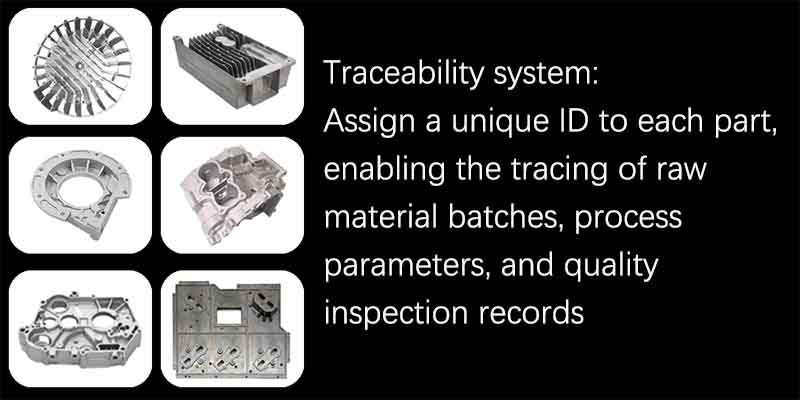
The cloud-based ordering system can quickly schedule production, while intelligent equipment assists with rapid mold changeovers to meet the diverse production demands of different products. Through the collaboration of IoT and six-axis robotic arms with CNC machining machines, even small batches of diversified orders can be handled efficiently. Each part is assigned a unique QR code ID, and relevant data, including incoming materials, production, and inspection information, are stored in the cloud. Users can trace and query the relevant data via the QR code ID.
Characteristics:
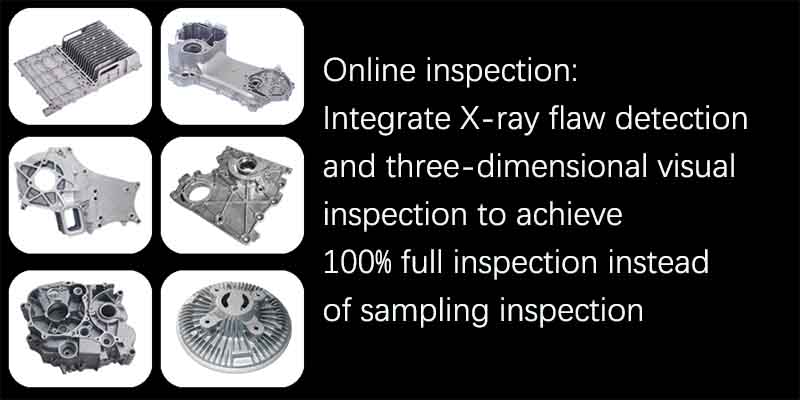
•Online inspection: Integrated X-ray inspection and three-dimensional visual inspection to achieve 100% full inspection instead of random inspection
•Traceability system: Assign a unique ID to each part, enabling the tracing of raw material batches, process parameters, and quality inspection records
•Green manufacturing: die casting waste heat is used to preheat raw materials and plant heating to achieve the goal of "double carbon"
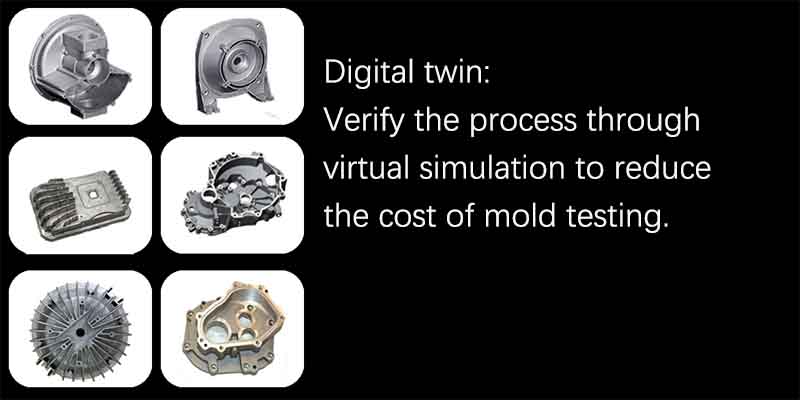
•Digital twin: Verify the process through virtual simulation to reduce the cost of mold testing.