The customer invests in the production line, what is the production process?
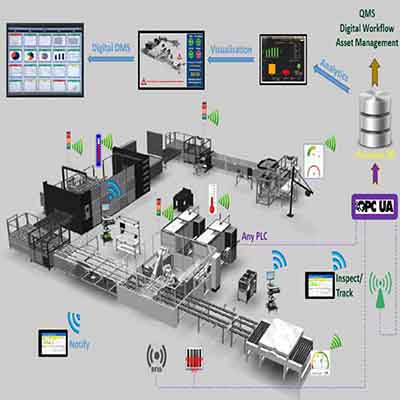
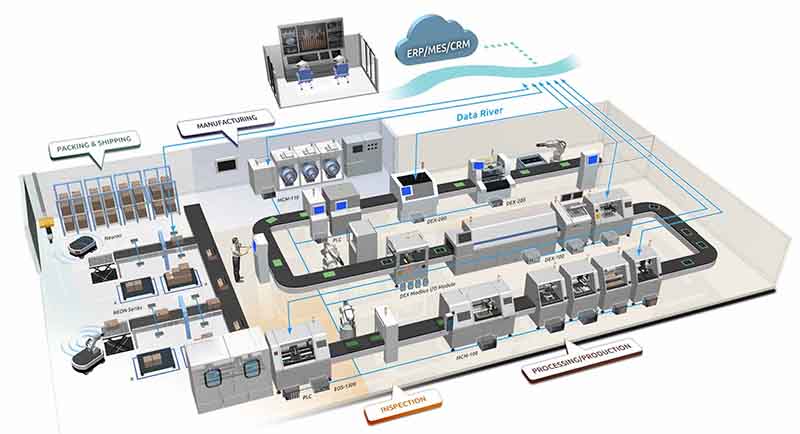
•Order: Orders are processed and managed through CRM — EDI — ERP, covering order handling, shipping, and related operations.
•Design: BOM and drawings are transferred from the PLM system to ERP via API integration.
•Production: The MES system feeds back production progress and quality data to the ERP, which then transmits relevant information through ERP — EDI — CRM.
•Analysis: BI tools consolidate internal data and share insights with customers via API or periodic reports.
What are the benefits of customer investment in the production line?
•Achieve controllable production capacity to ensure delivery schedules and enhance market responsiveness.
•Achieve controllable product costs to improve price competitiveness and profit margins.
•Achieve controllable product quality to strengthen brand reputation and customer satisfaction.
•Achieve controllable business security to reduce supply chain risks and build technological barriers.
How long does it take for the production line to switch product models?
According to the specific production requirements of the components, it is usually necessary to replace tooling such as molds, jigs, fixtures, gauges, measuring tools, cutting tools, and auxiliary tools, followed by debugging. Due to the varying process requirements of different products, the changeover time typically ranges from 30 to 150 minutes.
The customer invests in the production line, how can they recover their costs and achieve a win-win outcome?
•Customized Process Rights: Customers have the right to define production processes, enabling the creation of exclusive production standards and reducing costs for product iteration.
•Priority Production Capacity: Customers enjoy prioritized access to production capacity and exclusive discounts on processing fees.
•Depreciation Rebate Based on Usage: A portion of the depreciation is reimbursed based on actual production line usage, easing the customer's asset burden.
•Equity Conversion Mechanism: Production line assets can be converted into equity, helping preserve and grow the asset's value.
•Revenue Sharing on Similar Components: The production line can be used for components with similar processes, and customers are entitled to a share of the resulting revenue.
Where is the most suitable region/country for clients to invest in production lines?
Key Considerations:
•Proximity to major markets.
•Availability of raw materials and industrial support.
•Policy support and tax incentives.
•Labor costs.
•Geopolitical risks and tariff avoidance.
Recommended Regions:
•South China / Yangtze River Delta (China): Well-developed industrial chain and strong technological capabilities, suitable for mid- to high-end manufacturing.
•Vietnam / Thailand: Low labor costs and business-friendly policies, ideal for labor-intensive or assembly-based production.
•Mexico / Eastern Europe: Close to European and North American markets with efficient logistics, primarily suitable for clients targeting the U.S. market.
Formal Response from Huizhou Jiangwen Technology Co., Ltd.:
1. Why should clients invest in our production line?
We possess a mature technology system, stable production capacity, and a rapid response mechanism. This significantly reduces the initial investment, management costs, and operational risks associated with building an in-house production line, enabling efficient collaboration and optimal resource allocation.
2.Is the client’s investment secure?
We uphold a “technology for trust” cooperation philosophy, offering transparent processes, open production capacity, and a data-visible management system. This ensures that all parties develop steadily on the foundation of co-building, co-sharing, and mutual benefit.
3.What will clients gain from investing in the production line?
Through in-depth cooperation, clients will benefit from:
•Shorter delivery cycles, seizing market opportunities faster;
•Higher product consistency, enhancing brand reputation and quality recognition;
•Lower unit costs, strengthening market competitiveness.
Conclusion: Achieving joint development and control of supply chain autonomy.
Huizhou Jiangwen Technology Co., Ltd. adheres to the following philosophy:
•We exchange technology for capital, earning our clients’ trust and investment in equipment and production lines through innovation.
•We exchange technology for cost efficiency, continuously reducing costs and improving efficiency through automation and lean manufacturing.
•We exchange technology for quality, ensuring every product is trustworthy through digital quality control.
•We exchange technology for value, maximizing returns on every client investment.
•We exchange technology for trust, building long-term partnerships with a professional team and transparent operations.
•We exchange technology for strength, creating intelligent production capacity that is highly collaborative, resilient, and customizable.
•We exchange technology for shared success, helping clients stand out and stay ahead in fierce competition.
Believe in technology. Believe in us.
Technology empowers collaborative value creation and drives transformative progress.
Value Proposition of Huizhou Jiangwen Technology Co., Ltd.:
•Technological Leadership: The company possesses independently developed process technologies and equipment modification capabilities, enabling customized, flexible, and multi-category parallel production to meet diverse customer demands.
•Cost Reduction & Efficiency Enhancement: Leveraging digital management systems and automated production lines, the company effectively reduces unit production costs, shortens delivery cycles, and improves overall operational efficiency.
•Quality Assurance: A comprehensive quality control system combining technology, processes, and traceability ensures high consistency and stability of products.
•Shared Production Capacity: Customers who invest in equipment or production lines are granted priority access to production capacity, avoiding scheduling bottlenecks and enjoying "reserved manufacturing rights" to ensure delivery priority.
•Controlled Investment: Customers only need to invest in core equipment or customized production modules, while the company handles daily operations and management, realizing a "light-asset, strong-cooperation" model that lowers customer investment risks.