What are the production processes of traditional manufacturing industries like?
The production processes in traditional manufacturing industries are typically dispersed across multiple independently operated factories, characterized by the following notable features: frequent environmental changes, large area coverage, long transportation distances, and widely scattered transfer and temporary storage sites. Material handling and loading/unloading rely heavily on manual labor. Due to loosely connected processes and decentralized process layouts, the yield rate tends to be low, and resource waste is significant.
What is the Traditional Manufacturing Production Model?
The traditional manufacturing production model refers to a manufacturing approach characterized by manual operations, stand-alone automated machines, assembly line workflows, and large-scale standardized production. This model aims to achieve high efficiency and low cost, making it suitable for environments with limited product variety and high market demand. Its typical features include:
•Mass Production: Producing large quantities of identical products at once
•Fixed Processes: Following a predetermined and rigid sequence in the production process
•Labor-Driven: Heavily reliant on workers' manual operations and experience
•Plan-Driven: Organizing production based on market forecasts, usually resulting in high inventory levels
This model is well-suited for markets with relatively stable demand, but it lacks the flexibility and responsiveness required to meet diversified, personalized, and rapidly changing market needs.
What is Traditional Productivity?
1. Concept Definition
Traditional productivity refers to a production model based on resource input and centered on output efficiency. It emphasizes the intensive use of human labor, capital, and natural resources to achieve industrial-scale expansion and rapid economic growth.
2. Development Characteristics
a). High Resource Consumption: Relies heavily on high-intensity resources such as coal and oil as primary energy sources.
b). Scale First: Gains competitive advantage by expanding production capacity and reducing costs.Efficiency-Oriented:
c). Focuses on the economic output per unit of labor and per unit of time.
c). Environmental Neglect: Treats pollutant emissions and ecological damage as external issues to be addressed after development.
3. Technological Pathways
•Dominated by traditional mechanization and automation;
•Characterized by assembly line-style production organization;
•Lacks support from clean technologies and sustainable development concepts.
4. Main Evaluation Criteria
•Total output value and growth rate;
•Output per unit of labor or capital;
•Resource conversion efficiency.
5. Current Challenges
While traditional productivity has driven industrialization and urbanization, it has also led to serious problems such as energy crises, ecological degradation, and climate change. As sustainable development becomes a global consensus, the limitations of this model are becoming increasingly evident, highlighting the urgent need for transformation and upgrading.
1. Definition
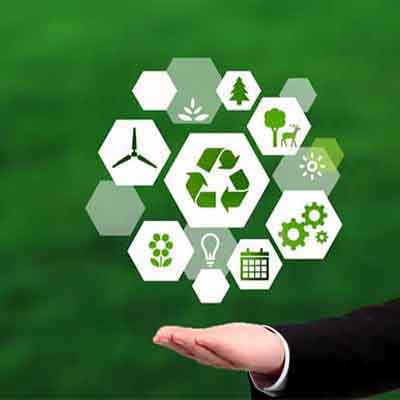
Green productivity refers to a mode of production that achieves resource conservation, environmental friendliness, and ecological sustainability while promoting economic growth. Its essence lies in the organic integration of economic, ecological, and social benefits.
2. Core Characteristics
a). Low Carbon and Energy Efficiency: Emphasizes optimization of the energy structure and improvement of energy efficiency.
b). Minimized Pollution: Focuses on emission reduction, pollution control, and clean production.
c). Resource Recycling and Reuse: Promotes the recycling of raw materials and the reuse of waste.
d). System Integration and Optimization: Implements green management throughout the entire product life cycle.
3. Technological Support
•Green manufacturing and smart factories
•Clean energy and energy storage technologies
•Eco-friendly materials and green design
•Digital monitoring and carbon footprint tracking
4. Key Performance Indicators
•Energy consumption and carbon emissions per unit of output
•Corporate environmental performance and green certifications
•Proportion of renewable resource utilization
•ESG (Environmental, Social, and Governance) performance
5. Strategic Value
Green productivity is not only a solution to resource and environmental constraints but also a new focal point in global economic competition. It is becoming a key driver of the new round of technological revolution and industrial upgrading, and a critical means to achieve carbon neutrality goals and high-quality development.
How to Optimize Traditional Productivity Production Models?
I. Process Optimization
1. Lean Production
•Eliminate waste (overproduction, excess inventory, unnecessary transportation, etc.)
•Improve production rhythm and shorten delivery cycles
•Implement 5S management to enhance on-site efficiency and standardization
2. Business Process Reengineering (BPR)
•Redesign core processes from a holistic perspective
•Break down departmental silos and achieve end-to-end integration
II. Digital and Automation Transformation
1. Introduction of Automated Equipment
•Automated production lines, robotic arms, AGV (Automated Guided Vehicles), etc.
•Increase capacity and reduce reliance on manual labor and human errors
2. Information System Implementation
•MES (Manufacturing Execution System): Enhances production transparency and responsiveness
•ERP (Enterprise Resource Planning): Integrates finance, procurement, inventory, and other data
•SCADA (Supervisory Control and Data Acquisition): Real-time monitoring of production equipment status
3. Data-Driven Decision-Making
•Apply Industrial Internet of Things (IIoT) and big data analytics to optimize equipment maintenance and resource allocation
III. Intelligent Manufacturing Upgrade
1. Digital Twin
•Create a virtual model of products or production processes for simulation, optimization, and predictive maintenance
2. Artificial Intelligence Applications
•For quality inspection (e.g., machine vision), capacity forecasting, and supply chain optimization
3. Flexible Manufacturing Systems (FMS)
•Rapidly switch between product models to meet the demands of high-mix, low-volume production
IV. Workforce and Organizational Optimization
1. Multi-Skilled Workforce Training
•Develop cross-functional talents to adapt to automation and digital systems
2. Flattened Organizational Structure
•Improve communication efficiency and reduce decision-making layers
3. Performance-Based Incentive Mechanism
•Motivate employees through multi-dimensional performance metrics including output, quality, and efficiency
V. Supply Chain and Market Responsiveness Optimization
1. Build a Flexible Supply Chain
•Establish multi-channel supply sources and dynamic inventory strategies to enhance risk resistance
2. Customer-to-Manufacturer (C2M) Production Model
•Connect front-end sales with back-end production to enable on-demand customization
3. Green and Low-Carbon Development
•Focus on energy conservation, emission reduction, and resource recycling to align with ESG and sustainability goals
Challenges in Transforming and Optimizing Traditional Production Models?
1. High Technical Barriers
•High Thresholds for Automation and Digitalization: Traditional enterprises generally lack automation equipment and industrial internet infrastructure, requiring significant technical investment for upgrades.
•Intelligent Transformation Depends on Specialized Talent: There is a shortage of interdisciplinary talent in algorithms, data analysis, and artificial intelligence, making it difficult to carry out smart transformation independently.
•Poor Technological Compatibility: Existing equipment and processes are poorly compatible with new technologies, often requiring complete overhauls or extensive modifications.
2. High Cost of Investment
•High Initial Investment for Transformation: Costs are substantial for equipment replacement, deployment of information systems, and employee training.
•Long Payback Periods: The return on investment is uncertain, making it difficult for many small and medium-sized enterprises (SMEs) to afford long-term capital commitments.
•Risk of Production Interruptions: Upgrades may require temporary production halts or reduced capacity, increasing operational risks.
3. Rigid Organizational and Management Models
•Deep-Rooted Traditional Management Practices: Decision-making based on experience and hierarchical control structures are hard to align with data-driven and flat management models.
•Resistance to Change: Employees and management often show low acceptance of new systems and processes.
•Lack of Change-Driving Mechanisms: Strategic goals for transformation are often vague, with insufficient cross-departmental coordination and execution capacity.
4. Weak Data Foundations
•Unstandardized Data Collection: Many enterprises lack IoT devices and data collection systems, resulting in severe data silos.
•Data Quality and Security Issues: Even when data is collected, issues such as inconsistent standards and high duplication rates persist.
•Lack of Decision-Making Capabilities: There is a gap between data collection and decision-making, due to a lack of analytical tools and capabilities.
5. Constraints from the Industrial Ecosystem
•Difficulties in Upstream and Downstream Coordination: Supply chains still rely on traditional communication methods, hindering overall ecosystem efficiency improvements.
•Regional and Policy Disparities: Some regions have weak industrial foundations, making it difficult to form intelligent manufacturing clusters or benefit from supportive policies.
•Lagging Customer Awareness: B2B clients often lack awareness or willingness to pay for intelligent products or services, requiring further market cultivation.
6. Lag in Institutional and Policy Adaptation
•Incomplete Supporting Institutions: Legal mechanisms around data ownership, privacy protection, and liability for intelligent system failures are still underdeveloped.
•Insufficient Incentive Mechanisms: There is a lack of effective fiscal, tax, or financial tools to encourage enterprise transformation.
Conclusion
The optimization and transformation of traditional production models is not merely a matter of technological substitution. It entails a systemic transformation across multiple dimensions, including technology, organization, culture, capital, and ecosystem. The difficulty is not only high but also demands strategic thinking and sustained investment. Therefore, breakthroughs can only be achieved through coordinated efforts in top-level design, policy guidance, industry collaboration, and technology implementation.
What is an Integrated Production Line?
An Integrated Production Line is an advanced manufacturing system that organically integrates multiple production processes, equipment, and control systems. Its primary goals are to enhance production efficiency, increase the level of digitalization, and improve product quality. Through unified design, it efficiently connects processes such as machining, assembly, inspection, and packaging, enabling coordinated operations and stable quality control throughout the entire production cycle.
In the context of increasingly stringent “dual carbon” goals and sustainable development requirements, integrated production lines have become a key means for enterprises to implement ESG principles and promote green and intelligent manufacturing.
1. Characteristics
•Process Integration: Multiple production steps are connected in a single line, significantly reducing manual handling and wait times between intermediate stages.
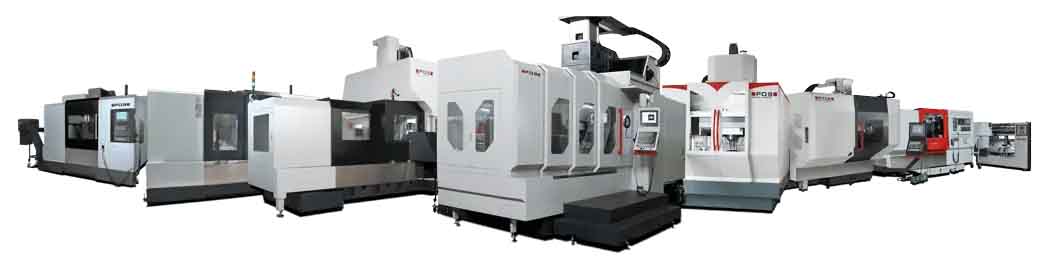
•High Degree of Automation: Equipped with intelligent devices such as robots, automated conveyors, and CNC machines, these lines minimize human intervention and enhance production efficiency and consistency.
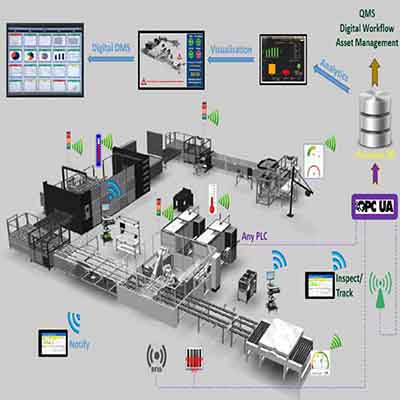
•Information System Support: Backed by systems such as MES, PLC, and SCADA, enabling optimized equipment scheduling, data collection, and real-time monitoring to support lean production and data-driven decision-making.
•Flexibility and Modularity: Designed with flexibility and modularity, allowing rapid adjustments to the production process in response to changes in product types or batch sizes, meeting the demands of small-batch and multi-variety customized production.
2. Advantages
•Significantly increases production efficiency and reduces overall manufacturing costs.
•Ensures product consistency and improves quality stability.
•Reduces dependence on skilled labor and minimizes the risk of human error.
•Enables real-time monitoring and traceability throughout the entire process, enhancing management transparency and responsiveness.
•Saves space and improves plant utilization.
•Has wide applicability across various industries, including automotive manufacturing, electronics, smart equipment, medical devices, and food processing.
Why build a new Integrated Production Line?
The decision to build a new integrated production line is based on a comprehensive consideration of cost-effectiveness and technological upgrades. Compared with retrofitting old lines, investing in a new line offers better cost performance. The supporting machinery is equipped with intelligent interfaces, significantly enhancing energy efficiency and automation levels, thus laying a solid foundation for the production of high-quality products.