
Previous
Next
Welding
After welding by industrial robots, the billet first forms an initial welded part, which is then processed by CNC machining to obtain a high-precision welded component. The maximum size of the parts is limited by the working radius of industrial robots, which in turn determines the classification of part families. Therefore, it is necessary to optimize and balance the process flow of such part families to plan and design an efficient, integrated flexible production line.
The cloud-based ordering system enables rapid production scheduling and, with the support of intelligent equipment, facilitates quick mold changes to meet the production needs of different products. Through IoT technology, industrial robots and CNC machines achieve collaborative operation, allowing efficient processing even for small-batch, multi-variety orders. Each part is assigned a unique QR code ID, with its raw material, production, and inspection data stored in the cloud, enabling users to trace information by scanning the QR code ID.
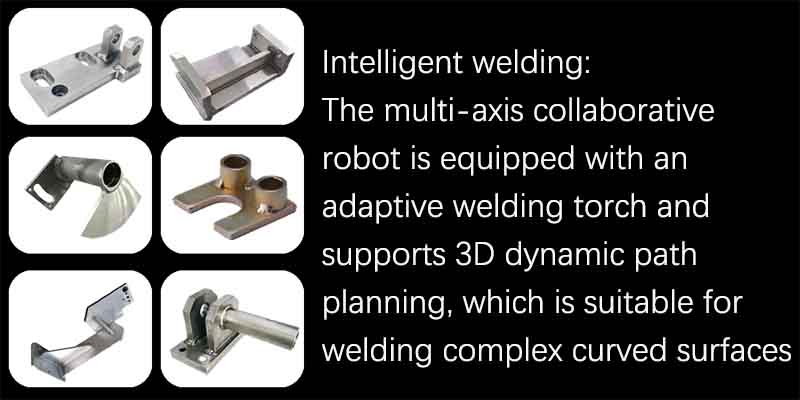
•Intelligent welding: The multi-axis collaborative robot is equipped with an adaptive welding torch and supports 3D dynamic path planning, which is suitable for welding complex curved surfaces
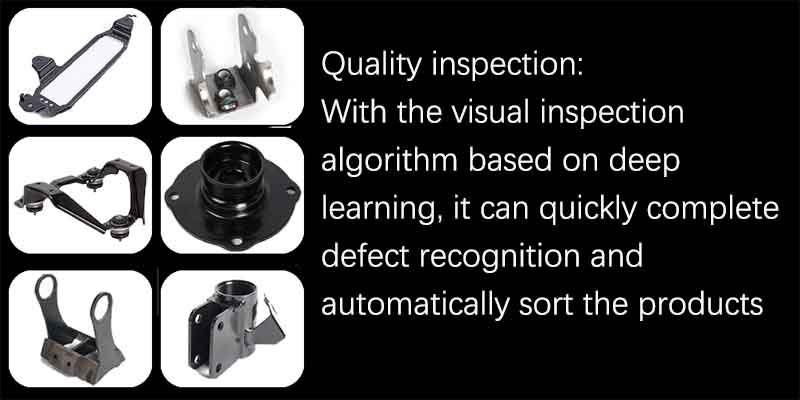
•Quality inspection: With the visual inspection algorithm based on deep learning, it can quickly complete defect recognition and automatically sort the products
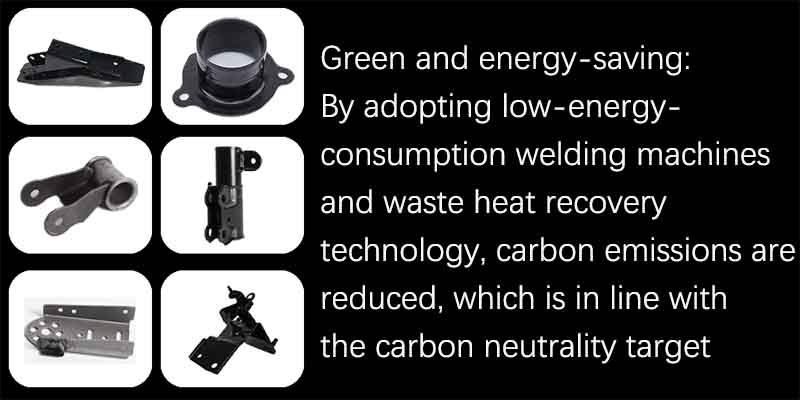
•Green and energy-saving: By adopting low-energy-consumption welding machines and waste heat recovery technology, carbon emissions are reduced, which is in line with the carbon neutrality target.