Previous
Next
Elastomeric materials
Two-color and multi-color molds in soft rubber molding represent a complex yet highly efficient manufacturing technology, particularly suitable for products that require the combination of soft and hard materials or multi-color designs. Two-color molding involves sequentially injecting different materials (usually soft and hard rubber) in the same injection molding machine. By utilizing mold rotation or translation to switch cavities, the process ensures a tight bond between the two materials during molding. In contrast, multi-color molding injects two or more materials within a single molding cycle, utilizing a more complex mold structure and multiple injection units to achieve a perfect combination of multiple colors or materials.
The molding process of solid silicone rubber (solid-state silicone elastomer) typically involves high-temperature vulcanization and physical processing, with specific techniques depending on product shape, performance requirements, and production scale. Common solid silicone molding processes include compression molding, injection molding, extrusion molding, calendering, and casting molding for specialized products. Regardless of the method used, high-temperature vulcanization remains the core of solid silicone molding, ensuring diverse process options to meet various product demands.
The molding process of liquid silicone rubber (LSR) differs significantly, relying on the excellent fluidity of liquid materials and the chemical reaction (addition curing) that occurs after mixing its two components (A+B). LSR molding processes are known for their high efficiency and precision, making them ideal for complex structures and widely used in medical, electronics, and automotive industries. The primary LSR molding techniques include liquid silicone injection molding (LSR Injection Molding), pouring/casting, coating, dip molding, and 3D printing (additive manufacturing). The selection of a specific process depends on the product’s characteristics and functional requirements.
Regardless of the molding process employed, we uphold the philosophy of intelligent manufacturing to achieve rapid product category transitions while ensuring stable, high-quality, and efficient production.
Characteristics:
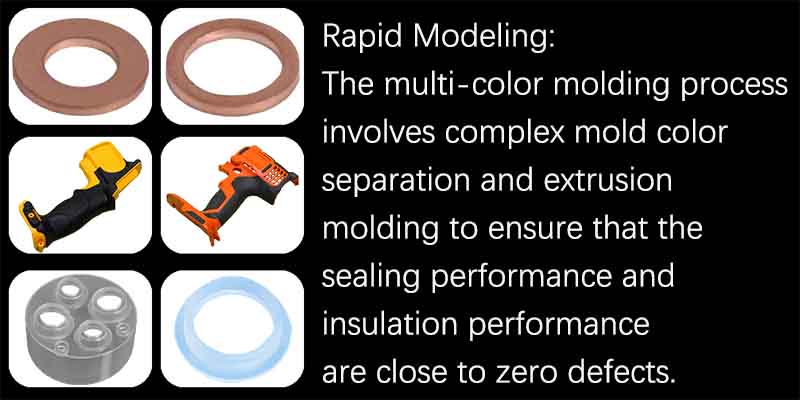
•Rapid Modeling: The multi-color molding process involves complex mold color separation and extrusion molding to ensure that the sealing performance and insulation performance are close to zero defects
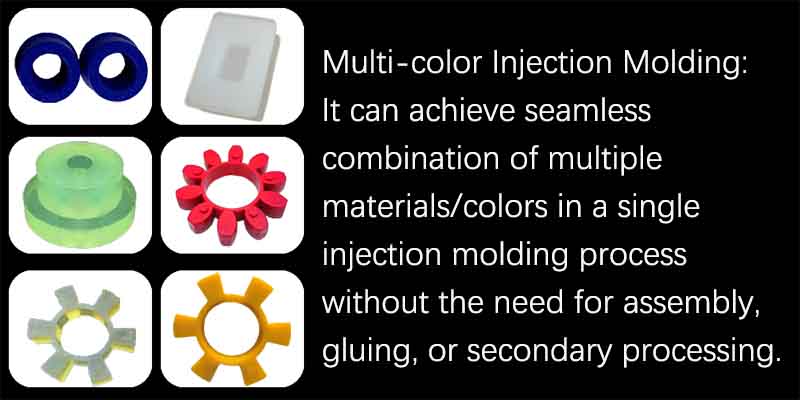
•Multi-color Injection Molding: It can achieve seamless combination of multiple materials/colors in a single injection molding process without the need for assembly, gluing, or secondary processing
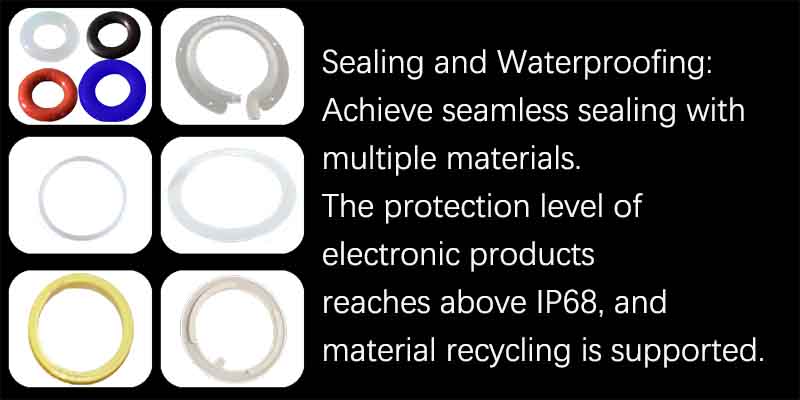
•Sealing and Waterproofing: Achieve seamless sealing with multiple materials. The protection level of electronic products reaches above IP68, and material recycling is supported
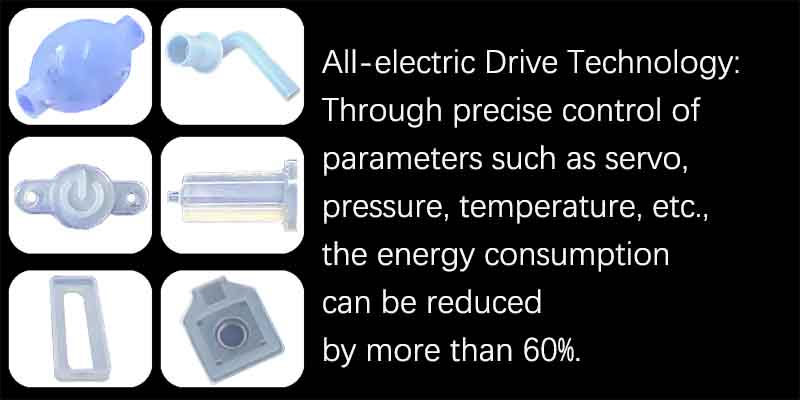
•All-electric Drive Technology: Through precise control of parameters such as servo, pressure, temperature, etc., the energy consumption can be reduced by more than 60%.